Resource Circulation
Waste reduction and recycling
J-オイルミルズグループでは、廃棄物の削減や再資源化を推進し、毎年ゼロエミッション※を実践しています。2024年度も廃棄物の有価物化を推進し、⽣産部⾨での再資源化率は目標の99.9%以上を維持・継続しています。引き続きエネルギーや原料、⽔、資材などの投⼊量の削減に努め、排出される汚染物質や廃棄物を減らす取り組み、再資源化に努めていきます。さらに化石燃料由来のプラスチックの削減に努めるほか、⾮⽣産部⾨においても廃棄物に関するe-ラーニングや環境セミナー等を実施し、全社を挙げて資源利用効率の最大化に取り組んでいきます。
※当社では、ゼロエミッションを工場・事業所から発生する産業廃棄物について、単純焼却・埋立処分を行わないこと(再資源化率99.9%以上)と定義しています。

Water Resource Conservation
水は、原料作物の栽培や製品製造⼯程など、サプライチェーンにおいて⽋かすことのできない⼤切な資源です。特に、当社の⼯場では、蒸気や冷却⽤媒体などさまざまな形で⽔を使⽤しており、水資源の保全は重要課題であると認識しています。
当社では、取締役が委員長を務めるサステナビリティ委員会のもと、水使用量の削減と水リスクの的確な把握に努め、計画的な対策を通じることで環境負荷の低減に取り組んでいます。
水使用量の削減
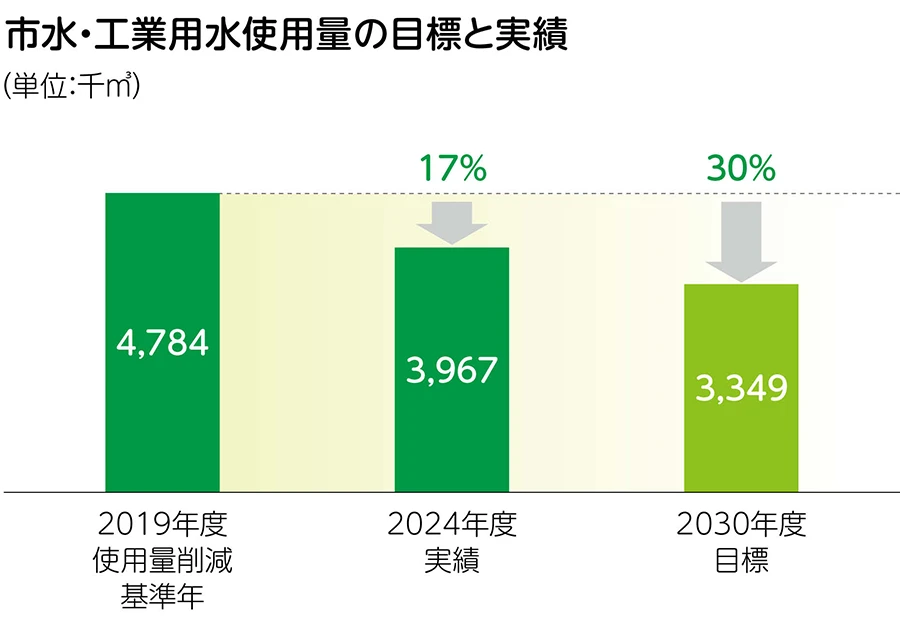
当社グループでは、市水・工業用水使用量を2030年度までに2019年度比で30%削減する目標を掲げ、効率的な⽔利⽤、再利⽤を促進し、取⽔量削減に努めています。2024年度の国内全工場の水使用量は3,967千㎥となり、2019年比で17%の削減を達成しました。
水資源の有効活用に向けて、水使用モニタリングの強化、水資源リサイクルの推進、水使用効率化に向けた運用面・設備面の改善を一体的に進めることで、さらなる削減と持続可能な水利用を目指しています。
水リスクの評価
当社グループでは、国内の生産拠点における水資源に関する重大なリスクの特定し管理しています。Aqueduct※1などの分析結果を参考に、地域の水環境、事業への影響度、発生可能性などを軸に、国内製造工場6拠点で水リスクと機会の評価を実施しました。その結果、ベースライン水ストレス※2が高い地域からの取水は確認されませんでしたが、4拠点において台風や高潮による水害リスクがあることが判明しました。これらの拠点では、防潮板の設置や高潮対策設備の更新など、具体的な対策を講じています。
今後も、食品企業として重要な水リスクの低減に努めるとともに、環境保全と事業継続を目指し、水資源に対する取り組みをさらに強化してまいります。
※1 Aqueduct:世界資源研究所(WRI)が提供する世界の水リスク評価ツール
※2 ベースライン水ストレス:水需要量と利用可能かつ再生可能な地表水・地下水供給量の比率をさす。値が高いほど利用者間の競合が激しい
Appropriate management of chemical substances
We strive to properly manage the chemical substances we handle in accordance with laws and regulations such as the Act on Reporting, etc. of Releases to the Environment of Chemical Substances and Promotion of Improvements in Their Management (PRTR Act), and we also properly manage other chemical substances.
Regarding PCB waste, we report the storage of PCB waste and dispose of it in a planned manner in accordance with the Act on Special Measures Concerning Promotion of Proper Disposal of Polychlorinated Biphenyl Waste (PCB Special Measures Act).
Guidelines for containers and packaging
| Guidelines for containers and packaging |
|---|
| We will seek out and adopt new technologies for recycling containers and packaging materials such as bottles, cans, and paper. |
| We strive to develop environmentally friendly products, such as by using product designs that reduce the amount of plastic containers and packaging used, and by using plant-based and easily recyclable materials. |
| We will promote the use of FSC-certified paper. |
| We will promote procurement of materials from companies that take ESG into consideration. |
| We strive to develop containers and packaging that can accommodate a diverse range of users. |
| We consider the entire supply chain and address transportation efficiency and labor shortages. |
Tackling the plastic problem
当社は2022年5月に2030年度「プラスチック廃棄ゼロ」目標を策定しました。
2021年、当社はプラスチックの廃棄量を2030年までに2000年度比で25%削減する目標を定め、達成に向けさまざまな取り組みを実施してきましたが、プラスチックに係る資源循環の促進等に関する法律の施行にともない、海の環境汚染や気候変動の原因となるプラスチックごみの削減に向けて、これまで以上に取り組みを進める必要があると考え、目標を上方修正しました。
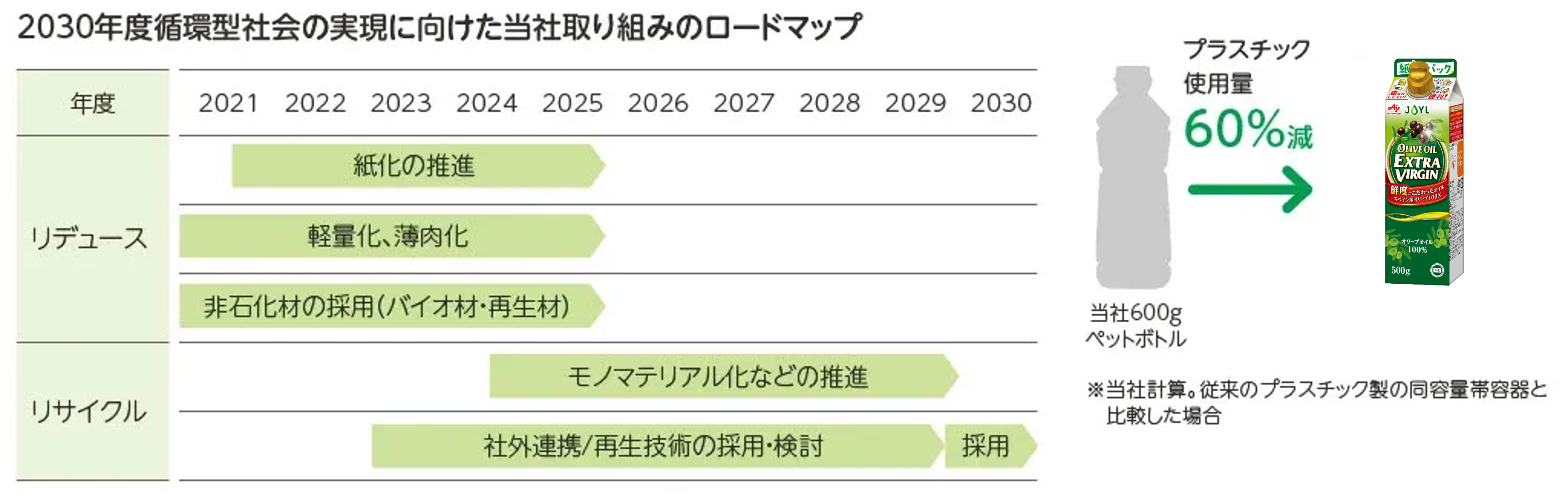
目標達成に向けて、紙パックを採用した環境配慮型商品「紙らくパック®」シリーズの拡充やバイオマス樹脂の採用、廃プラスチックの再利用や再生樹脂の活用をはじめ、企業間連携による再生技術開発の推進などを通じて、環境に配慮した商品の開発・販売に取り組みます。「紙らくパック®」シリーズは、プラスチック使用量を60%以上※、CO2排出量を26%以上削減※する「環境への配慮」、注ぐ量を調整できるダブルキャップによる「使いやすさ」を兼ね備えています。今後もリサイカブル包材への仕様変更や企業間連携による新たなリサイクル技術の確立などを通じ、環境負荷の低減に努めてまいります。
Efforts to reduce the weight of plastics
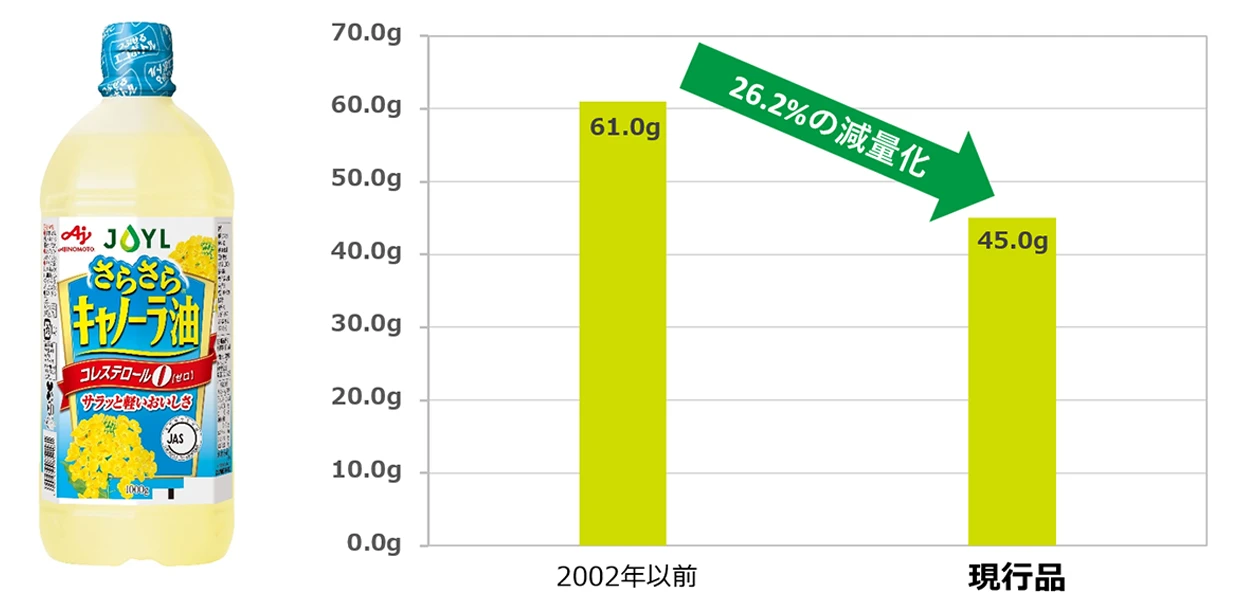
We have been actively working to reduce and lighten the amount of plastic used in our main packaging and containers for some time now. In collaboration with container and material manufacturers, we have promoted weight reduction efforts, and the weight of Eco Bottles (polyethylene bottles), which are used as containers for our main household oils and fats products, has been reduced by 26.2% compared to before 2002. In addition, the weight of UD Eco Pet (PET bottles), another main product container, has been reduced by 20.0% compared to before 2007.
1000g Eco Bottle Bottle Weight Trend
600gUD* Ecopet Pet weight trends
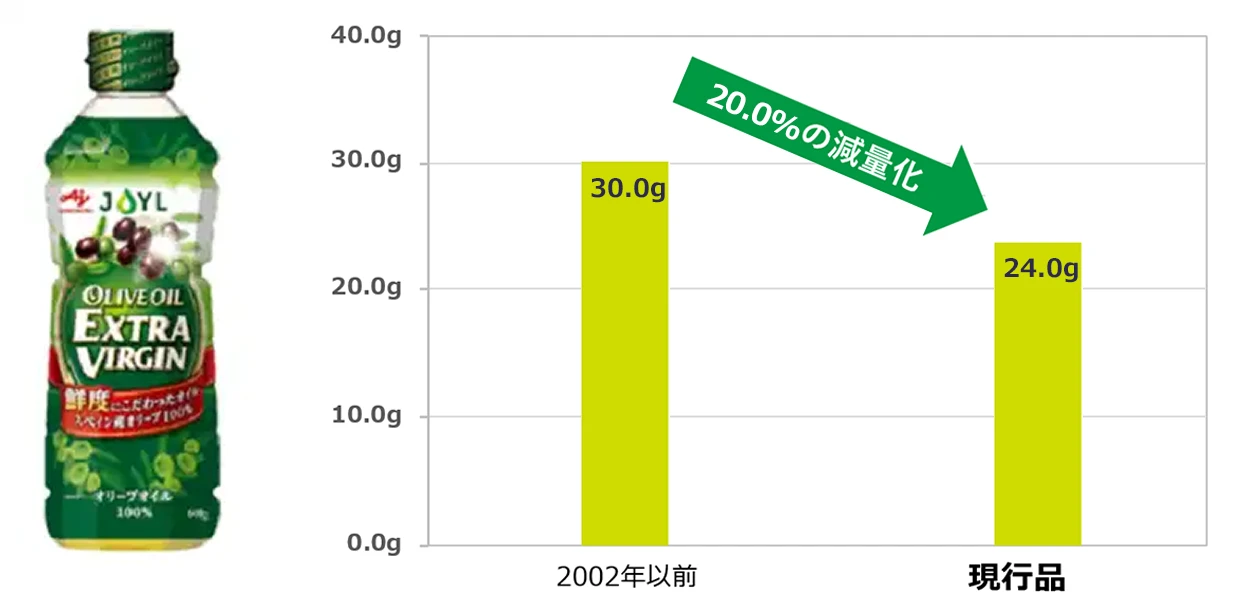
*Universal design
Initiatives to reduce plastic
紙パックを採用した環境配慮商品「紙らくパック®」
「紙らくパック®」シリーズは、当社が優先的に取り組むプラスチック廃棄物やCO2の削減を推し進めるため、油脂製品では珍しい紙パックを容器に採用し、包装機能と環境対応を追求したシリーズです。2021年8月に2製品を販売開始後、2022年春にシリーズ化しています。
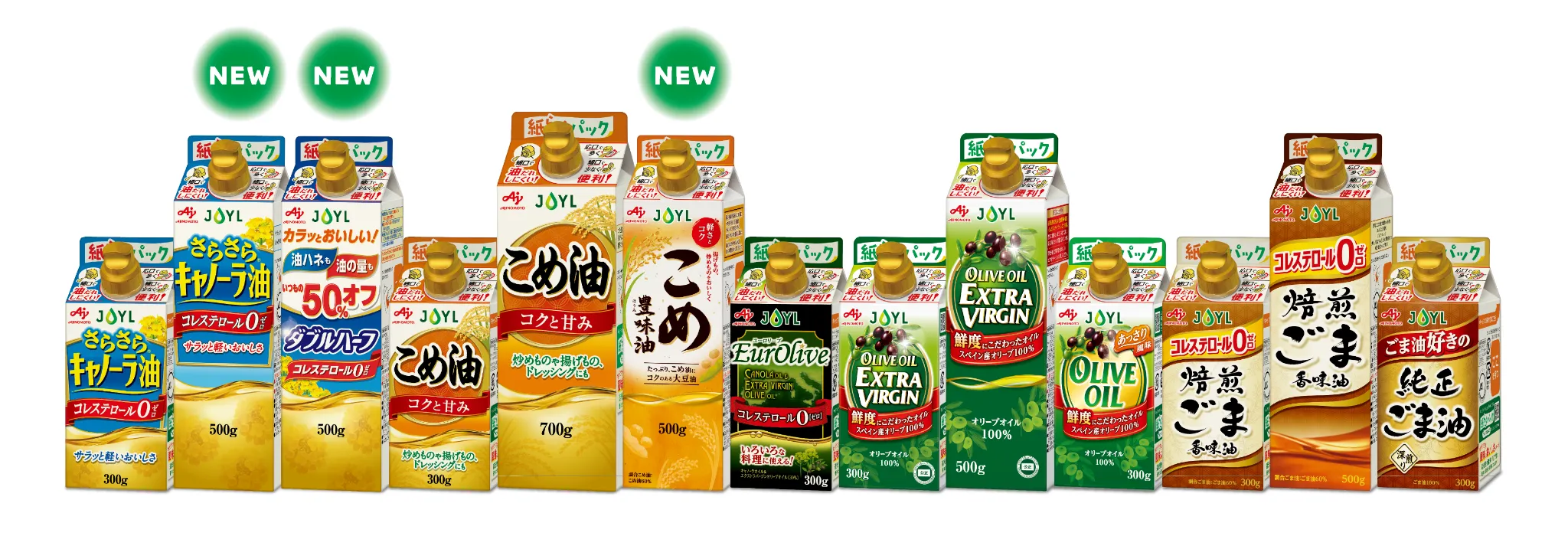
「紙らくパック®」シリーズ
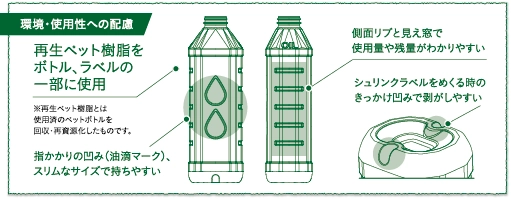
Recycled PET resin is used for the bottle and part of the label
In February 2024, we released a new product and renewed it, and we are now using recycled PET resin made from refurbished and recycled used PET bottles for some of the bottles and labels. We will continue to expand similar initiatives in the future.
Product design aimed at realizing "low-impact" value
当社では、低負荷商品の定義を①地球環境、②作業・労働環境、③食資源枯渇、いずれかに対応していることとし、2030年度までに低負荷商品比率100%の達成を目指しています。また、社会や環境の負荷低減に貢献することを目的に、「『低負荷』価値実現のための環境ガイドライン」を策定しています。本ガイドラインに基づき、商品の設計・開発段階から当社の企業理念である環境負荷抑制を積極的に取り入れるため、2023年度からは環境チェックリストを商品設計に導入し、「Joy for Life® -食で未来によろこびを®-」の実現に向けて社内外への発信の一貫性・適切性向上を図っています。